The grain, the dovetails, the finish — on film every day.
A bespoke kitchen or a hand-built staircase justifies its price the moment someone can see the joint, the grain match, the weight of the hardware — and a phone photo taken on install day never does. We turn the photos you already have, from bench shots to the finished room, into a fresh cinematic video every day, plus daily posts and carousels. You film nothing, edit nothing and post nothing.
Month-to-month, no agency retainer. We scope the right plan and pricing with you on a quick 15-minute call.
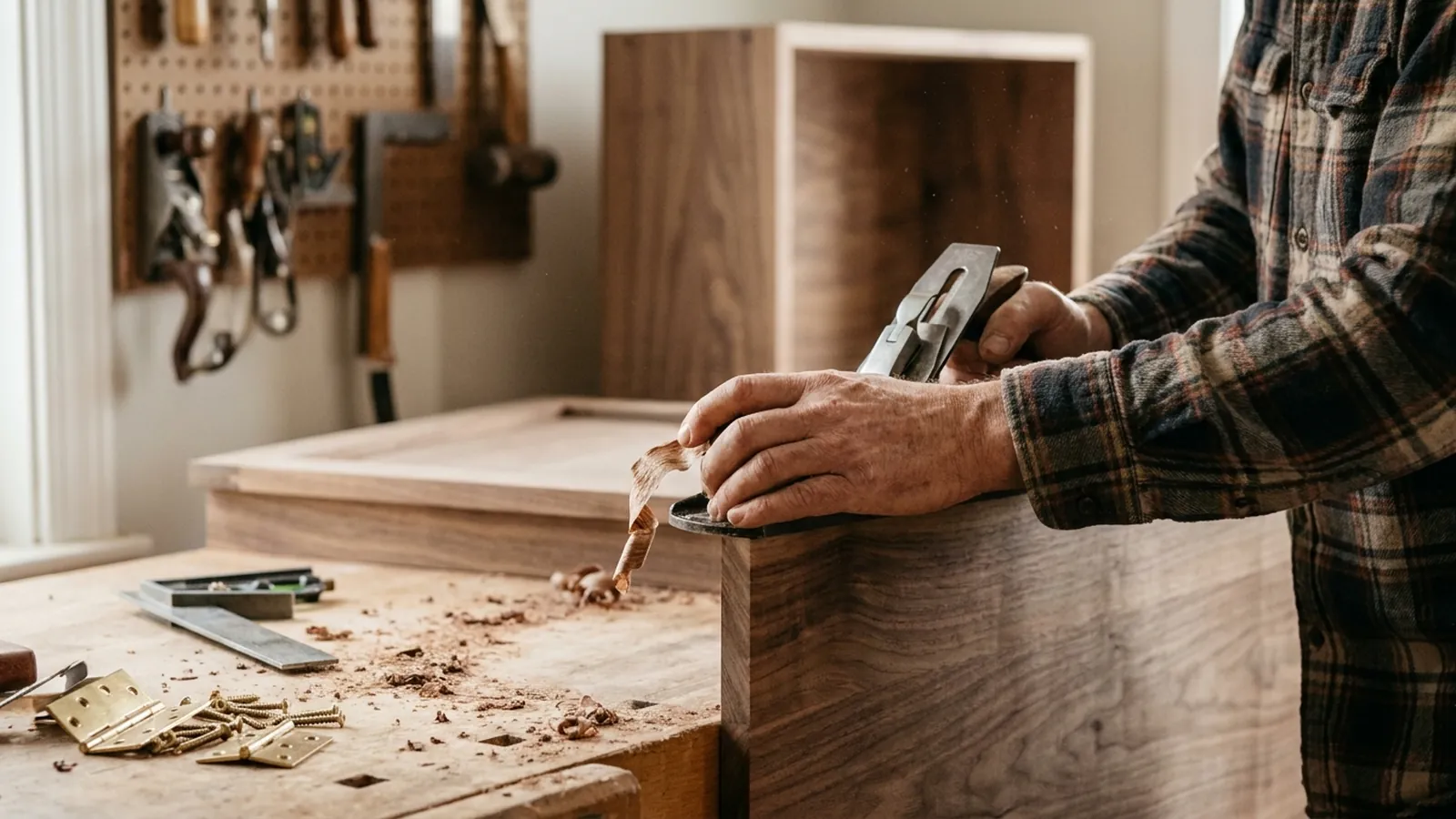 One photograph, filmed
Made from a single still — an example of the daily video we'd produce for you.
Why the best workshops are the hardest to find
The showroom chains outspend you before a homeowner has heard your name.
A mass-market kitchen retailer runs national advertising, retargets everyone who has ever typed "new kitchen" into a search bar, and keeps a showroom in every city. You have a workshop and four people in it. By the time a homeowner starts seriously looking, the big brands are simply there — and the shop actually making the better thing never enters the consideration set at all.
Your price only makes sense once someone can see the joint.
A hand-cut dovetail, a grain match carried across five doors, solid hardware with real weight in the hand, days of finishing after the joinery is done — that is the entire argument for what you charge. In a four-inch thumbnail it looks identical to vinyl-wrapped MDF from a flat-pack showroom. Your buyers aren't cheap; they just can't see the difference you're asking them to pay for.
Nine months of work, photographed once, on install day, on a phone.
The protective film is still on the doors, the electrician's cables are across the worktop, the light is wrong, and you're already loading the van for the next job. That one set of shots is the only evidence that exists of a project you spent most of a year on — and it goes into a folder on your phone rather than in front of the next client who needs convincing.
The whole pipeline is three designers who like you — and you're at the bench until six.
Referrals from interior designers and architects are the best leads you get and the most fragile: one moves practice, one retires, one's client goes elsewhere, and suddenly there's a hole in the diary. Building a second channel would fix that. But you're making things all day, and "post daily" does not survive contact with a workshop.
What we run for your workshop
The detail shots that justify the price — a new one every day
Raking light travelling across the grain, a slow push into a hand-cut dovetail, the pull of a solid brass handle, the depth of a hand-rubbed finish. We turn your existing close-ups into cinematic clips with real camera movement, so the craft that a flat photograph loses actually reads on a phone screen — fresh every day, without you touching a camera.
One commission becomes months of content
A single job is timber chosen at the rack, the carcass on the bench, shavings off the plane, the dry fit, the install, and the finished room in evening light. We turn each project into weeks of video, posts and carousels, so the kitchen you finished in spring is still bringing enquiries in autumn. No new shoot, no photographer, no downtime.
Content built for joinery, not "content" in general
We post what your buyers actually judge you on: species and grain, the joinery method, the hardware, the finish, the way a run scribes into a wall that isn't straight. Written for homeowners commissioning something once in their lives and for the designers and architects deciding who to specify next — not a generic template that also runs a gym's page.
Comments and DMs answered, so warm enquiries don't cool off
Add the engagement layer and the architect asking whether you do curved work, or the homeowner asking about lead times, gets a proper answer within hours instead of next week. We also leave useful comments where designers, architects and renovating homeowners already gather, so your workshop shows up in front of the people specifying joinery right now.
A week of your feed
One cinematic video plus posts and carousels, every day — all built from photography a workshop already owns. This is the shape of a week, not a stock gallery.
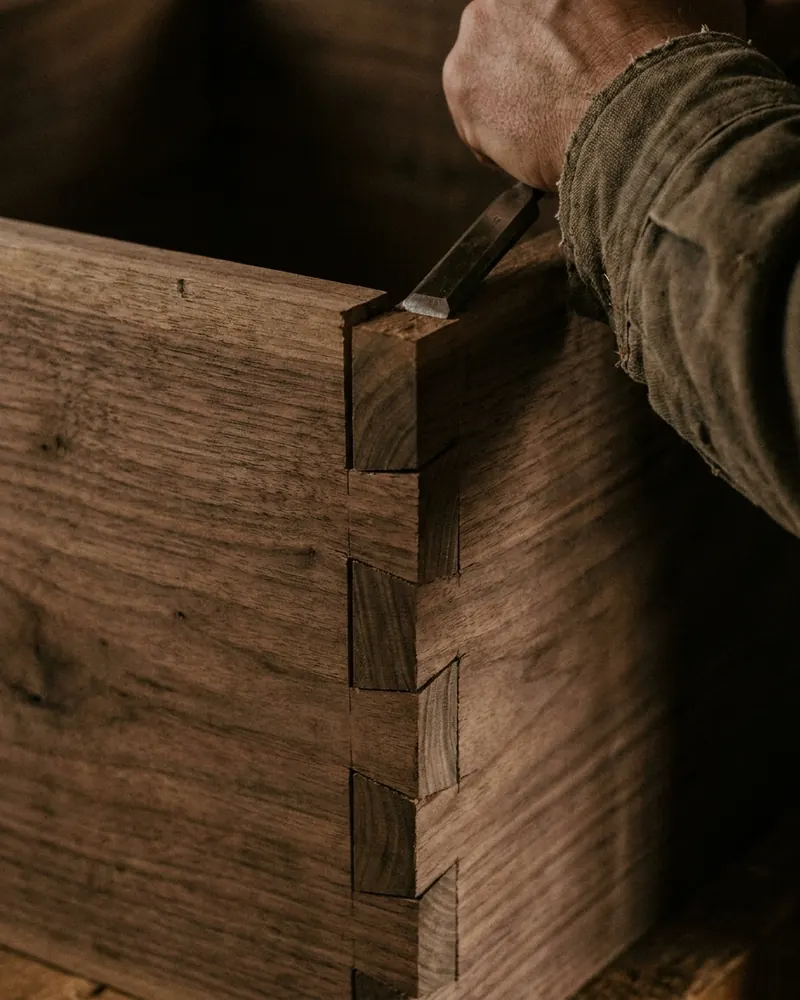
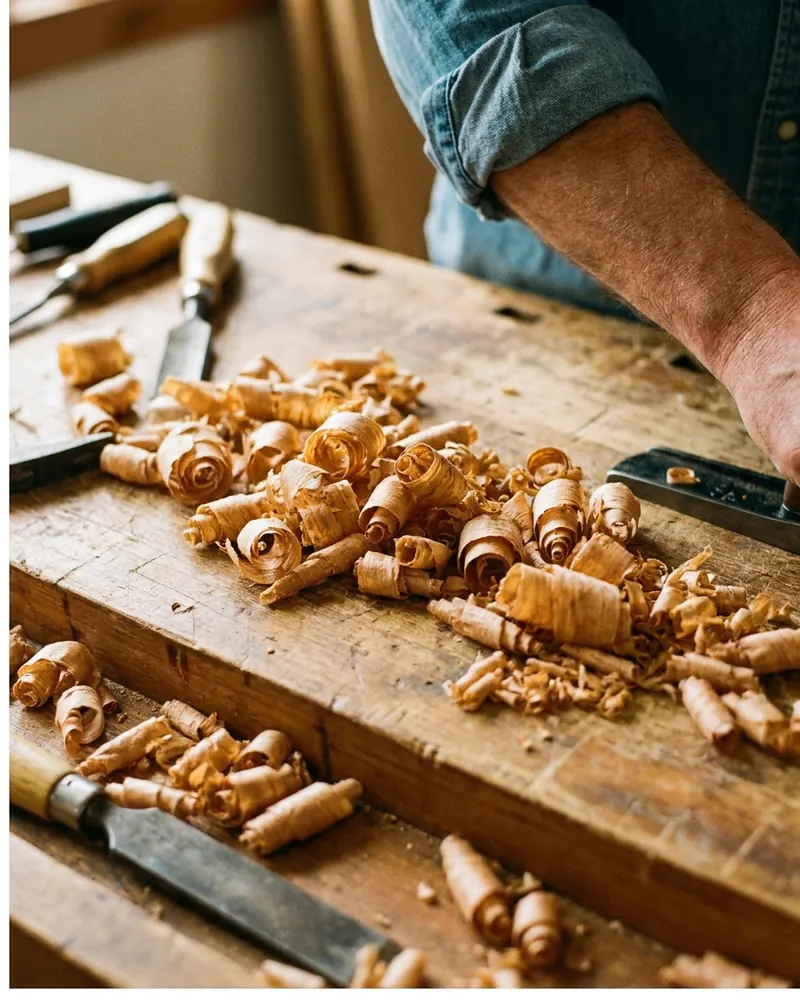
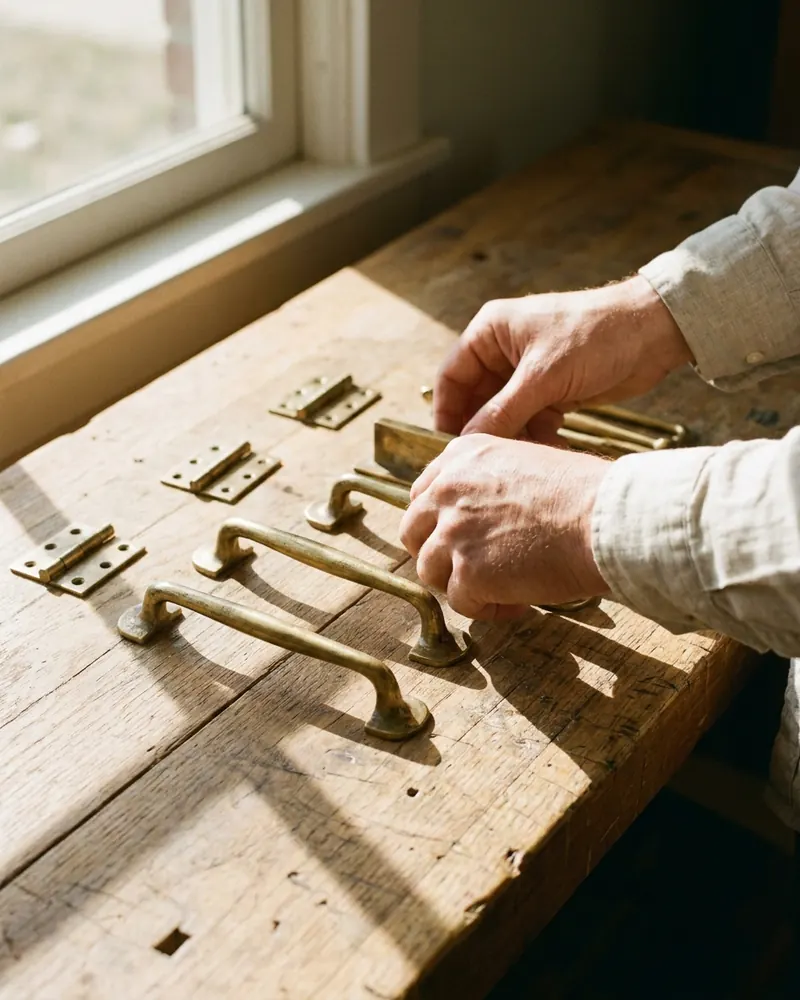
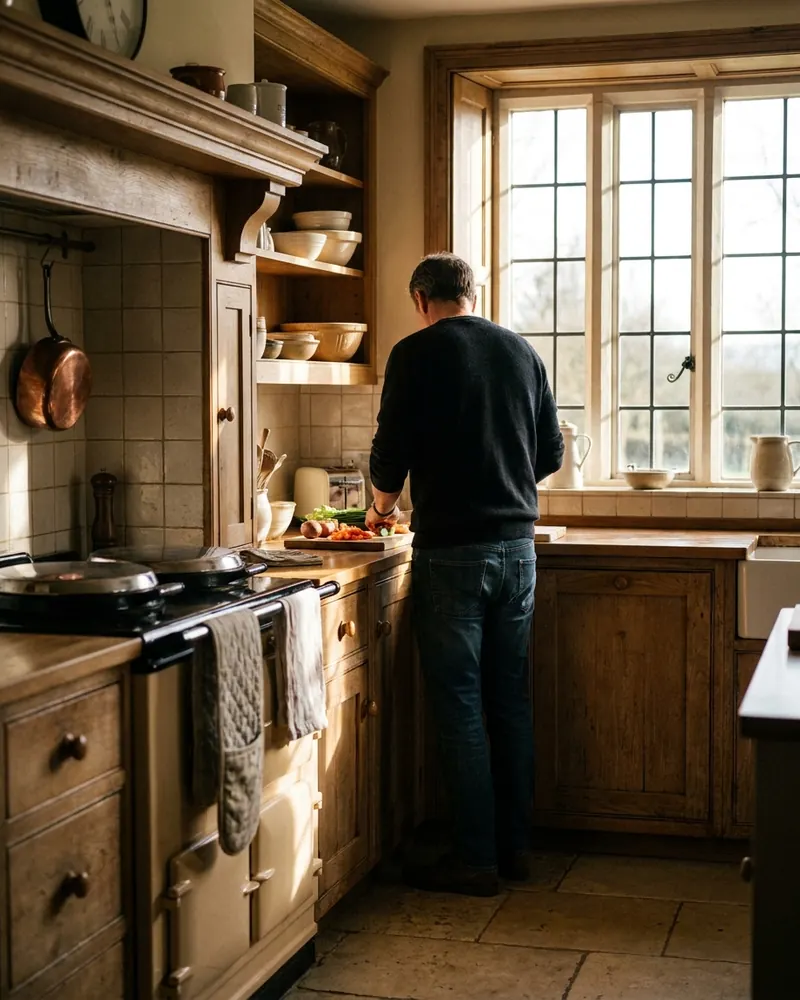
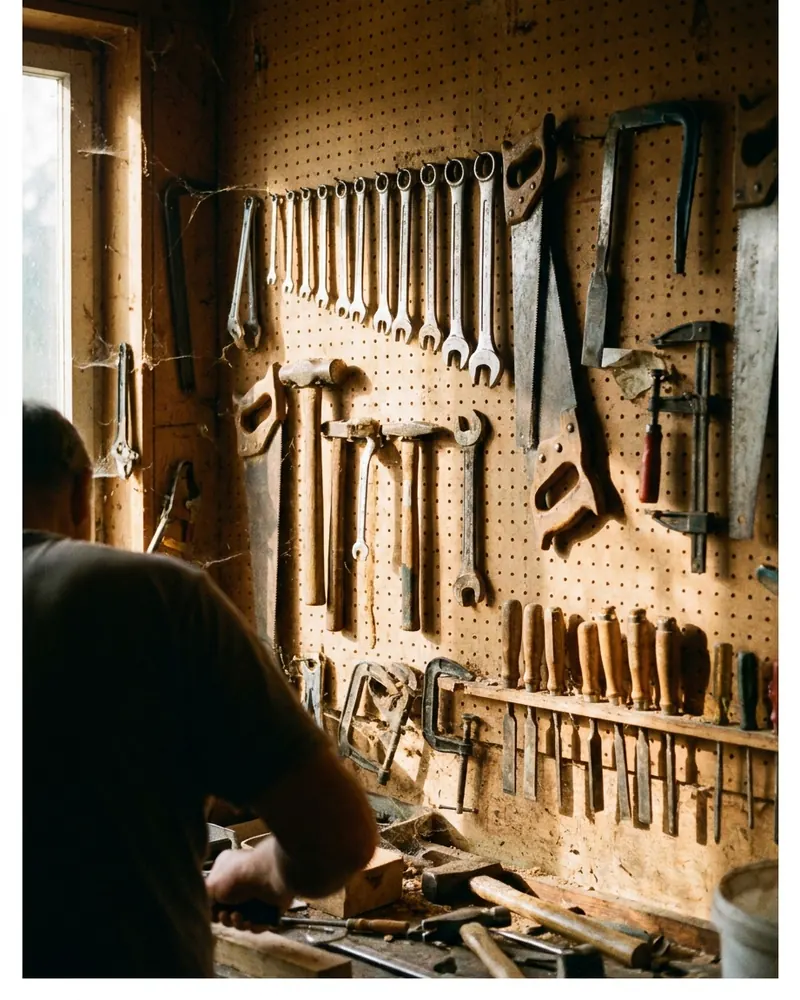
An example week, produced the way we produce a real one — every frame built from photography a business like this already owns. Not a delivered client campaign.
What social media for joinery and bespoke kitchen companies looks like
Workshops lose work to companies with worse craft and better feeds. The fix is not posting more finished kitchens — it is running the pillars that show the difference between your work and a flat-pack, in a format where the difference is actually visible.
Macro on the thing you are proud of
The dovetail, the grain match across a run of doors, the hand-planed edge, the shadow gap that stays parallel over three metres. Detail at close range is the only way a phone screen can carry quality, and it is the content that makes a designer decide you are the workshop for a difficult job.
The workshop itself
Machining, dry assembly, hand-fitting, the spray booth. People buy bespoke because it is made by someone rather than stamped out, and showing the making is the proof. It is also the most watchable material you own — process holds attention in a way a finished photo never does.
Install day
The van, the carry-in, the first door hung, the room finished at six in the evening. Install is the day the whole job becomes real, and it is a natural narrative arc that needs almost no writing to work.
Timber and hardware knowledge
Why quarter-sawn oak moves less, what a soft-close drawer runner really costs, why the ironmongery is a third of the feel. Teaching earns trust in a category where clients are spending heavily on something they cannot easily judge, and it pre-answers the questions that stall a quote.
Speaking to specifiers
Interior designers and architects place most high-value joinery work and they follow workshops looking for one who can execute their drawings. Content aimed at that eye — how a tricky junction was resolved, tolerances held on an out-of-square wall — is a referral engine dressed as a post.
The archive
Every kitchen and every fitted room you have made is still content. Older installs, re-cut with fresh detail crops and motion, keep the feed running through a quiet month without you photographing anything new.
Most workshops we speak to have hundreds of usable photos already on a phone, taken as job records rather than as marketing. That archive is the starting stock, and it is usually enough to run for months before you need to think about photography at all.
Guestar vs a creative agency or freelance videographer
| Guestar | Agency / videographer | |
|---|---|---|
| Daily craft video | Every day | Rarely, if ever |
| Price | Flat monthly rate, scoped on a call | $2,000–$5,000/month |
| Posting frequency | Daily | 3–4×/week |
| Contract | Month-to-month | 3–6 month minimum |
| Content source | Your own workshop and install photos | Paid shoot days, or stock |
| Engagement replies | Optional add-on | Not included |
Social media for joinery businesses — common questions
Can you really make a good video from our existing photos?
The finish is our whole product. Won't AI video distort the detail?
We only photograph properly on install day, and not always well. Is that enough?
Most of our work comes through interior designers and architects. Does social actually matter?
What plans do you offer, and what does it cost?
Our photos are job records taken on a phone in bad light. Is that workable?
Will AI video make our work look like something we did not make?
We are a two-person workshop with a full order book. Why would we bother?
We run the same service for
How we compare
Paying an agency, or posting when you remember? Two honest write-ups.
Want a couple of sample videos of your last kitchen?
15 minutes on a call and you'll know if this is a fit. If it isn't, we'll tell you.
Book your callPrefer email? admin@guestar.ai